

Rankings can feel random when you’re starting a business, especially if you’re trying to build passive income and you’re doing a hundred things at once. One week your page shows up, the next week it’s gone, and you’re left wondering if you broke the internet.
The Google update that taught me the most is Penguin. It first rolled out in 2012 and it went after link spam and other manipulative tactics that made weak pages look “popular.” Later, Penguin stopped being a once-in-a-while event and became part of Google’s core system, with link evaluation happening in real time (so changes can show up faster).
The payoff is simple: the lessons changed how I build trust, write landing page copy, and even how I run paid ads, because everything still comes back to what happens after the click.
What Penguin changed, and the lesson I will never ignore again

An entrepreneur noticing a drop in rankings and backlink issues, created with AI.
Penguin was Google drawing a hard line in the sand. It tried to stop link schemes, link spam, and anchor text that looked like a robot wrote it. It also lined up with other spam signals like keyword stuffing, hidden text, and pages that were thin or copied but were “propped up” by shady promotion.
Before Penguin, you could pile up low-quality backlinks and watch pages climb, even if the page didn’t help anyone. Penguin pushed back on that. Google got better at telling the difference between a site that earned attention and a site that rented it.
One detail matters if you’ve ever felt like your traffic dropped overnight. Early Penguin hits could be brutal, because whole sites would lose visibility fast. Recovery also felt slow, because you might wait months for another refresh. Since Penguin became part of the core system (and kept getting evaluated continuously), it’s become more granular. In many cases, Google may ignore bad links instead of tanking your entire site, which is a relief, but it’s still not permission to play games.
If you want a clear, plain-English refresher on what Penguin is and why it exists, this Google Penguin overview is a helpful starting point.
Here’s the lesson I carry into every SEO decision now: if growth depends on tricks you can’t explain to a real customer, it’s not stable.
To keep myself honest, I think of Penguin like a credit score check. You can’t sweet-talk it. You can only build trust over time.
This quick table is the simplest way I’ve found to explain the shift:
| What Penguin tried to reduce | What kept working long-term |
|---|---|
| Paid link blasts and link networks | Mentions from real, relevant sites |
| Exact-match anchor text everywhere | Natural anchor text that fits the sentence |
| “SEO pages” written for bots | Pages that answer a buyer’s real questions |
The goal didn’t change. Google algorithms still want the best result. Penguin just made it harder to fake.
Penguin taught me that “shortcuts” create long-term risk
The shortcuts are tempting, especially when you’re bootstrapping. I’ve seen new business owners buy cheap backlinks, join private blog networks, or pay for directory blasts because it feels like “doing SEO” without waiting.
Another common one is forcing exact-match anchor text everywhere. You know the vibe: every link says the same money phrase, and every heading repeats it too. It can look like progress, until it doesn’t.
The real cost shows up later. Rankings get shaky. You waste money chasing fixes. Worse, recovery takes focus away from the work that actually brings in clients.
If a tactic only works when nobody’s looking closely, it’s probably not a tactic you want in your business.
I’m not saying this to scare you. I’m saying it because calm, steady traffic beats a spike that disappears.
The trust signals that replaced link tricks
Once link tricks stopped being reliable, the replacement wasn’t “more SEO.” It was more proof, more clarity, and more real help on the page.
These are the actions I now treat like non-negotiables:
- Show proof people can verify (testimonials, case studies, real photos, clear outcomes).
- Answer questions on-page so a visitor doesn’t have to hunt for basics.
- Make offers transparent (what it costs, what’s included, who it’s for).
- Use a clean site structure so pages connect in a way that makes sense.
- Keep claims honest so you don’t create distrust on first read.
Strong links still help, of course. Penguin didn’t “kill backlinks.” It just made them matter most when they’re earned because the page is worth sharing. For a practical take on link building after Penguin, I like this white-hat link building guide.
How Penguin reshaped my organic strategy for a landing page

A simple landing page plan being sketched out, created with AI.
When I’m building one landing page to sell a service or capture leads, Penguin pushes me into a simple playbook. The page has to be useful on its own, not “carried” by links that feel manufactured.
I structure the page like a guided conversation:
First comes a hero section with a clear promise and a next step that feels low pressure. Then I add proof that matches the promise, not generic hype. After that, I explain the process in plain steps so someone can picture working with me. Finally, I include FAQs that handle the stuff people hesitate to ask, like price range, timeline, and what happens after they book.
A clean call to action matters too. I don’t hide it, and I don’t shout it.
Also, site speed and mobile experience still matter because they affect real people. If the page feels slow or awkward, visitors bounce, and that behavior is feedback Google can pick up on over time. Penguin might be about links, but it nudged me toward a bigger truth: you can’t separate SEO from the user experience.
This mindset also fits nicely with funnel thinking. If you’re building a lead magnet or a simple sequence behind the page, this guide on passive income funnels for women entrepreneurs pairs well with landing page work.
Build the page around one real problem, not a pile of phrases
I pick one intent and commit to it. For example, “book a consultation” or “get a website review.” Then every section supports that one action.
Next, I write the copy like I’m answering a friend’s questions over coffee. I cover the basics people care about before they’re ready to buy: price range, typical timeline, what’s included, and who it’s best for. I also say what it’s not for, which sounds risky, but it saves everyone time.
Clarity beats cleverness here. If someone can skim and still understand the offer, the page is doing its job.
Earn clean links the slow way, by being genuinely useful
Link earning can feel like a mystery, but it’s often just relationships and reputation.
Three ways I’ve seen work well (and feel doable):
- Partner referrals from people who already serve your audience.
- Local or community features (think podcasts, newsletters, small business roundups).
- Teaching something small, like a workshop, then sharing a checklist or template people cite.
Vendor mentions help too. If you use a tool and you have a public case study, sometimes they’ll share it.
What I avoid now is the “anchor text campaign” mindset. I don’t try to force exact-match anchors, and I don’t touch those “100 links for $49” offers. Penguin made that kind of bargain look expensive.
How Penguin changes paid search too, even if it was an organic update
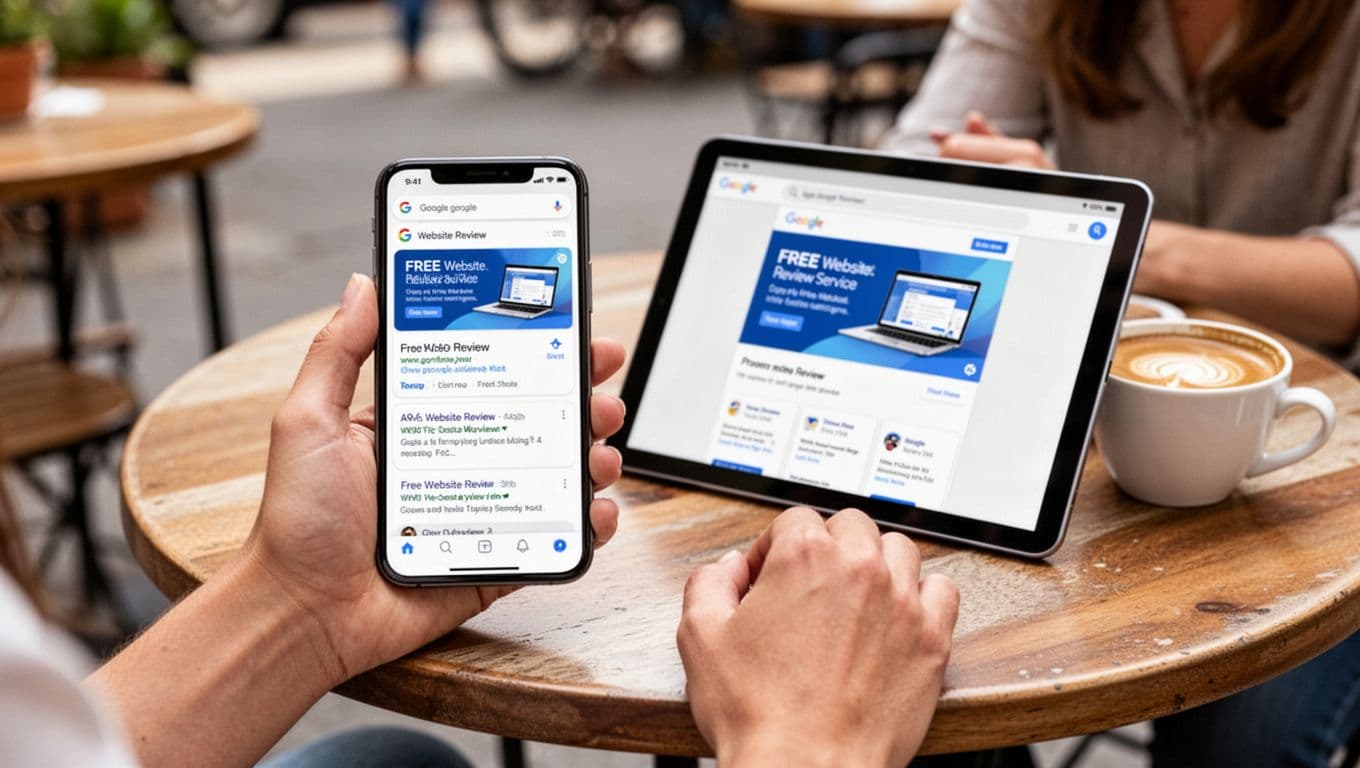
Paid and organic results leading to a landing page experience, created with AI.
Penguin was an organic update, but it changed how I think about paid campaigns because paid traffic still lands on a page that has to build trust fast. You can buy the click, but you can’t buy belief.
Ad platforms also reward relevance and good user experience. You don’t need to get technical to feel it. When your ad promise matches your page, results tend to improve. When the page feels like a bait-and-switch, people bounce, and costs usually climb.
In February 2026, this matters even more because people are tired, budgets are tighter, and platforms keep pushing for clearer, more honest experiences. In other words, your landing page and your ad copy have to agree with each other like they’re on the same team.
Make your ad promise match the first 5 seconds on the page
I use a simple check before running ads:
- Same offer: If the ad says free review, the page leads with free review.
- Same audience: The page speaks to the same person the ad targeted.
- Same next step: If the ad says “book,” don’t make them “apply” instead.
- Same meaning: Don’t imply results you can’t back up.
Here’s a quick example. If the ad says “free website review,” the landing page should explain what’s included, how long it takes, and what happens next. That’s how you keep trust intact.
Use paid campaigns to test what people actually want, then improve the page
Paid traffic is also a learning tool. I’ll test one change at a time, like the headline, the proof block, or the order of FAQs. Then I keep the winners and drop the rest.
This helps organic too because a clearer page keeps people engaged. Less confusion usually means more scroll depth, more form starts, and more conversions.
Good tracking matters here, especially as privacy changes keep getting stricter. If you’re running Meta ads, this breakdown of Facebook Conversion API server-side tracking is a solid companion read.
The bottom line: Penguin pushed me toward steadier growth
Penguin taught me to stop chasing loopholes and start building trust that holds up. Google algorithms change, but the safest path is still the same: real value, clear answers, and a page that feels honest.
If you want three simple next steps, start here: audit your backlinks and cut any risky tactics, rewrite your landing page so it matches one intent and shows real proof, then align ads with the page and track results so you know what’s working.
You don’t need hacks to grow a business. You need a message people understand, and a page that keeps its promises. Steady trust beats shortcuts, especially when you’re building something you want to last.


0 Comments